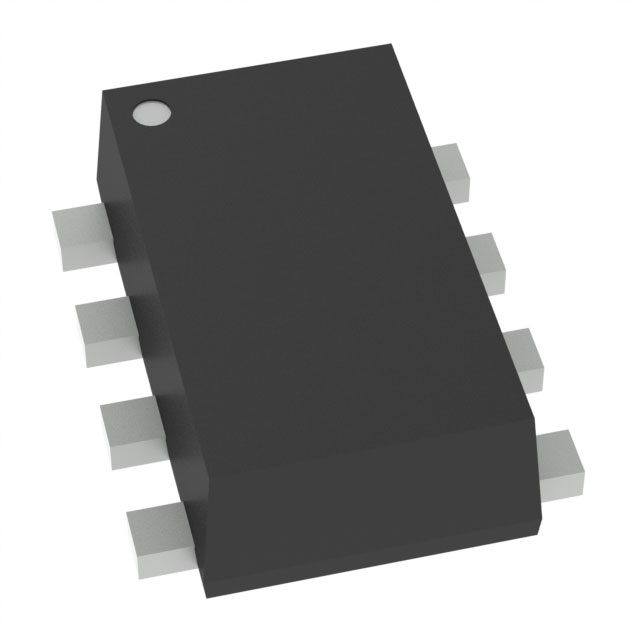
In embedded and low-power applications, power path management is a crucial design challenge—especially when switching between multiple input supplies such as batteries, USB, or regulated DC sources. The TPS2117 from Texas Instruments is a compact, efficient solution tailored for this purpose, enabling seamless supply switchover while maintaining power integrity to the load.
This article outlines the key hardware characteristics of the TPS2117 and discusses how to integrate it effectively into designs that demand flexible and robust power source management.
1. Power Range and Current Handling
The TPS2117 supports a broad operating voltage range (from 1.6 V up to 5.5 V), making it suitable for applications powered by lithium batteries, LDO regulators, or 5V USB rails. Its ability to deliver up to 4 A continuous output current provides sufficient headroom for most mid-range embedded systems, such as portable industrial instruments, smart meters, or building control units.
One standout feature is its ultra-low power consumption, which makes it ideal for battery-powered products. With quiescent and standby currents in the microampere and sub-microampere range, the device minimizes idle power drain—helping to extend battery life in standby-heavy use cases.
2. Flexible Switchover Control
To accommodate various application needs, the TPS2117 supports three distinct operating modes:
- Priority mode, which automatically prefers one supply and switches to the alternate only when the preferred input falls below a defined threshold.
- Manual control mode, which allows direct control of the active supply via a digital logic signal—ideal for systems using a host MCU.
- Diode emulation mode, where the highest available input voltage is automatically routed to the output, offering passive switching without external logic.
This level of configurability gives designers the flexibility to fine-tune power management strategies based on system behavior, redundancy requirements, or energy efficiency goals.
3. Inrush Control and Output Slew Rate
One of the core challenges in power multiplexing is managing the output behavior during transitions. TPS2117 incorporates an internal ramping mechanism that smooths the voltage rise when a new input source is selected. This mitigates the impact of inrush current and reduces voltage spikes that could destabilize downstream circuits.
This feature is particularly beneficial when large output capacitors are present or when the load includes sensitive analog components or microcontrollers that require a clean power-up profile.
4. Protection Against Reverse Currents
The device includes a built-in reverse current blocking feature, which prevents energy from flowing back into the input when the output voltage temporarily exceeds the selected supply. This behavior is vital in scenarios involving multiple sources that may not be tightly synchronized or when output capacitors could retain charge after switchover.
By monitoring voltage differentials and controlling the internal switches accordingly, the TPS2117 maintains directional power flow and safeguards upstream circuitry.
5. Design Tips for Implementation
To maximize performance and reliability when integrating the TPS2117, consider the following hardware practices:
- Place decoupling capacitors close to the input and output pins to suppress voltage fluctuations and absorb switching noise.
- Route power traces as wide and short as possible, especially for input/output and ground paths, to minimize resistance and inductive drop.
- If using manual mode, ensure the control logic levels are clearly defined and not left floating to avoid unintentional transitions.
- When operating in environments with potential voltage instability, consider adding sufficient bulk capacitance at both input rails.
6. Typical Use Cases
Thanks to its combination of low power draw, configurable control, and protection features, the TPS2117 is well-suited for:
- Embedded systems that rely on both main and backup supplies
- Battery-powered devices requiring long standby operation
- Applications with dual redundant power inputs, such as in industrial automation or communication gateways
- Designs needing graceful recovery from input voltage drops or power brownouts
Conclusion
The TPS2117 is a practical and efficient solution for power path control in systems with multiple voltage sources. Its blend of low power consumption, intelligent switching logic, and built-in protection makes it a strong candidate for designers seeking to ensure uninterrupted power delivery and long-term system stability.
💼 About Us | Singapore Trans Sen Electronics Pte. Ltd.
Founded in 2015, Singapore Trans Sen Electronics Pte. Ltd. is led by a core team of professionals who previously served in world-renowned brands and distributors. With 20+ years of industry experience, our sales, sourcing, and FAE teams work closely to deliver reliable and efficient services to our valued clients.
We specialize in the distribution of electronic components and franchised brands, backed by strong global sourcing capabilities and professional technical support.
🔧 Our Services
- Comprehensive BOM analysis and sourcing
- Obsolete & EOL (End-of-Life) part solutions
- Alternative and cross-reference part recommendations
- Strategic sourcing for long lead-time components
- Global logistics coordination
- In-house technical support and customized FAE consulting
- Buffer stock planning & inventory management
- Support for NPI (New Product Introduction) and mass production
Click here to explore our latest LinkedIn post.